
Supply Chain Fundamentals Module 4 - Scheduling   43-slide PPT PowerPoint presentation slide deck (PPTX)
$24.00

Supply Chain Fundamentals Module 4 - Scheduling (43-slide PPT PowerPoint presentation slide deck (PPTX)) Preview Image
Log in to unlock full preview.
Supply Chain Fundamentals Module 4 - Scheduling (43-slide PPT PowerPoint presentation slide deck (PPTX)) Preview Image
Arrow   Click main image to view in full screen.

Supply Chain Fundamentals Module 4 - Scheduling (PowerPoint PPTX Slide Deck)

PowerPoint (PPTX) 43 Slides

$24.00
This presentation is developed by a pioneer in Lean and certified LSS Master Black Belt who has trained over 5,000+ students globally, from Directors, CEOs, GMs, to shop floor staff. He's endorsed by CMI Consortium, NZTE, HERA, NZPICS, CBAFF.
Add to Cart


Immediate download
Fully editable PowerPoint
Free lifetime updates

BENEFITS OF THIS POWERPOINT DOCUMENT

  1. Understand how to schedule jobs

SCHEDULING PPT DESCRIPTION

Editor Summary Supply Chain Fundamentals Module 4 - Scheduling is a 43-slide PowerPoint presentation from OpEx Academy NZ, developed by a Lean pioneer and certified LSS Master Black Belt. Read more

The Supply Chain Fundamentals Series has 5 modules in all as below:
Module 1 – Forecasting – 73 Slides
Module 2 – Aggregate Planning – 28 Slides
Module 3 – Materials Requirement Planning – 36 Slides
Module 4 – Scheduling – 43 Slides
Module 5 – Inventory Management – 69 Slides

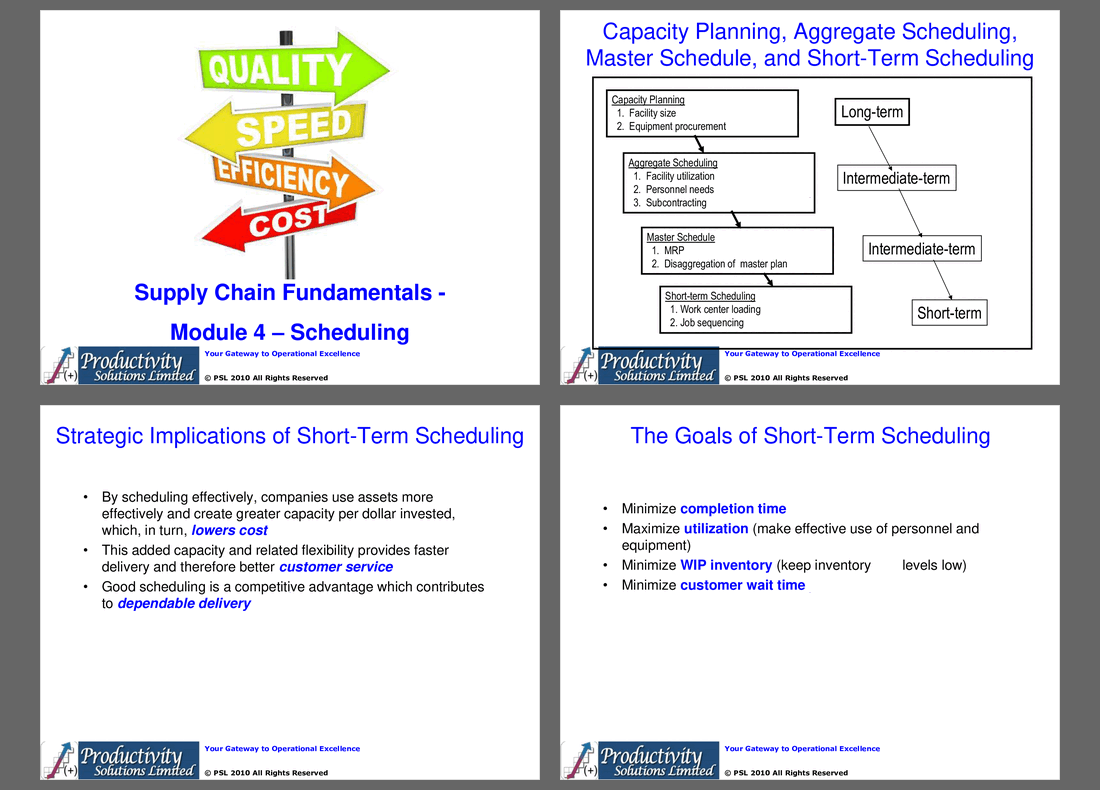
The 4th Module on Scheduling covers the following topics:
Scheduling Implications
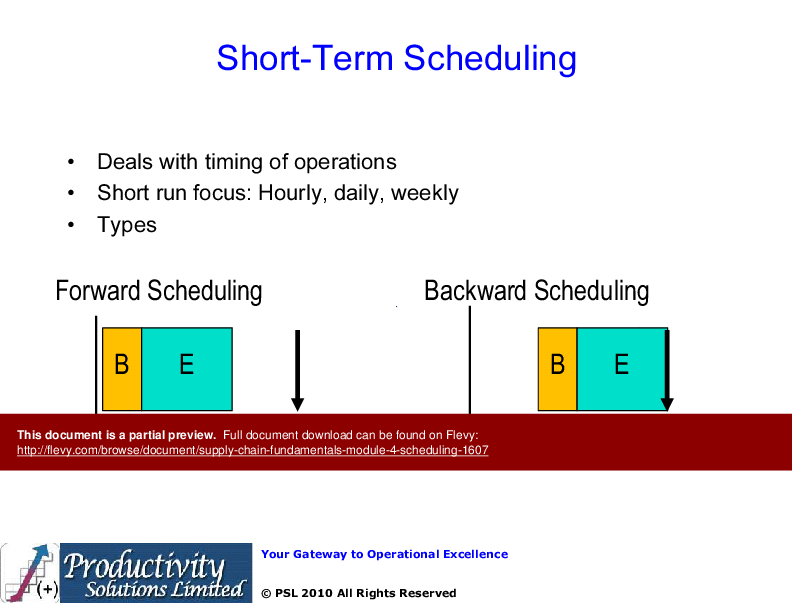
Forward and Backward Scheduling
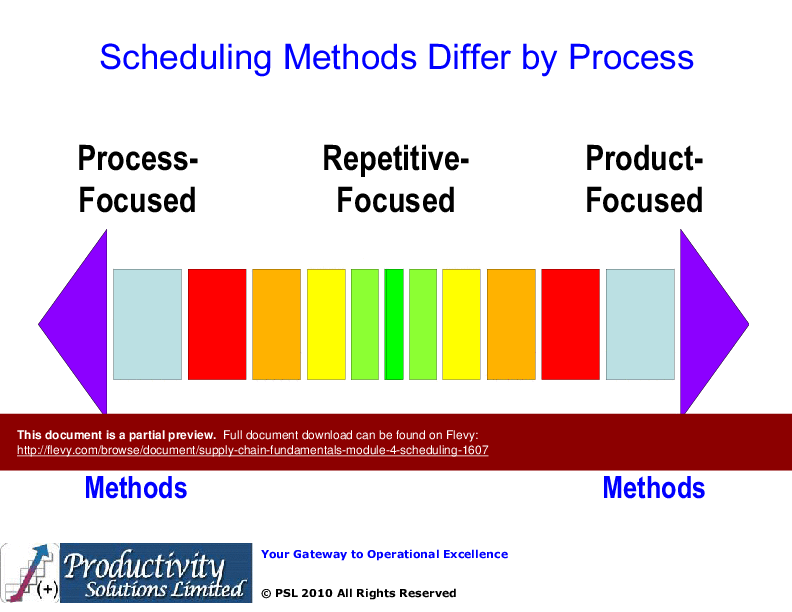
Scheduling Methods
Types of Planning Files
Item Master File
Routing File
Work Centre Master File
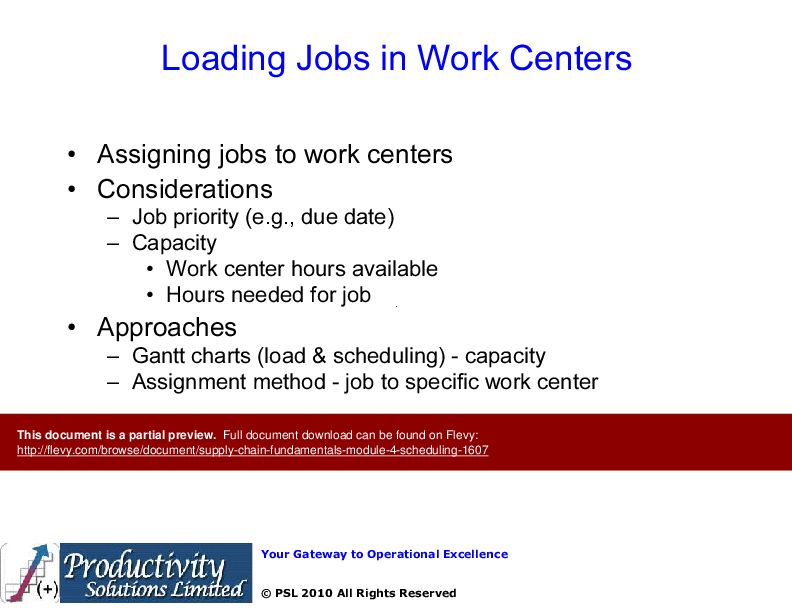
Loading Jobs in Work Centres
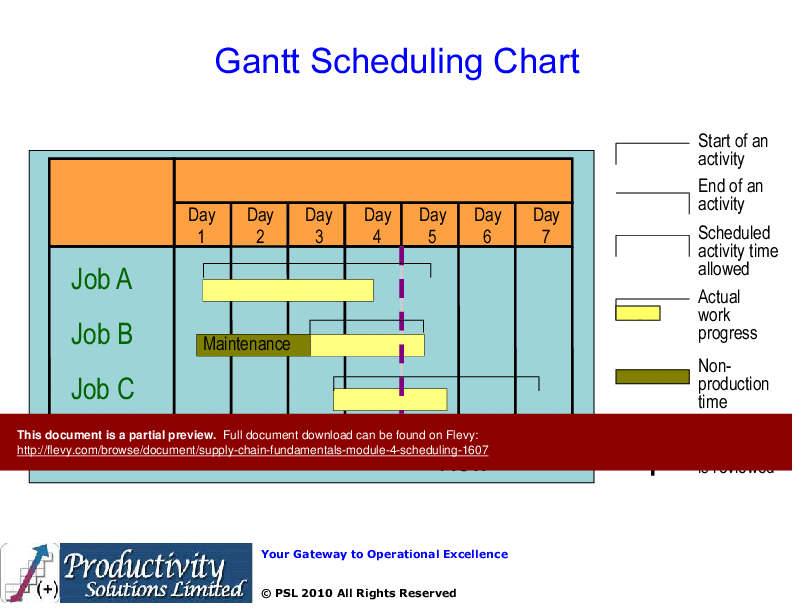
Gantt Charts
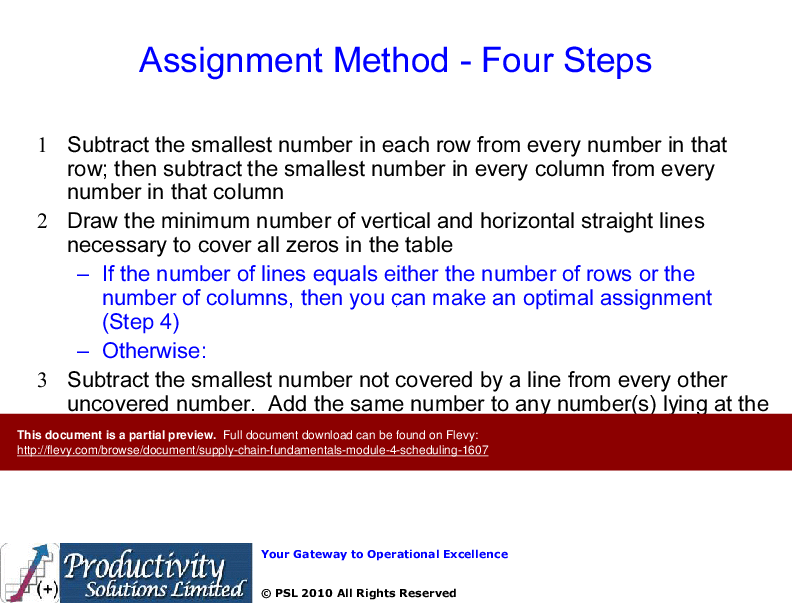
Assignment Methods
Sequencing

Buy all the 5 modules as a bundle and receive 25% discount!

Got a question about the product? Email us at support@flevy.com or ask the author directly by using the "Ask the Author a Question" form. If you cannot view the preview above this document description, go here to view the large preview instead.

MARCUS OVERVIEW

This synopsis was written by Marcus [?] based on the analysis of the full 43-slide presentation.


Executive Summary
This presentation, "Supply Chain Fundamentals Module 4 - Scheduling," is designed to enhance operational efficiency through effective scheduling techniques. Developed by a Lean pioneer and certified LSS Master Black Belt, the module covers essential concepts such as forward and backward scheduling, Gantt charts, and job sequencing. By utilizing this resource, corporate executives and supply chain leaders can optimize asset utilization, reduce costs, and improve customer service through strategic scheduling practices.

Who This Is For and When to Use
•  Supply Chain Managers overseeing scheduling operations
•  Operations Executives focused on maximizing efficiency
•  Project Managers responsible for resource allocation
•  Production Supervisors managing workflow in manufacturing settings

Best-fit moments to use this deck:
•  During training sessions for new supply chain staff
•  When implementing new scheduling software or methodologies
•  In workshops aimed at improving operational efficiency
•  For strategic planning meetings focused on capacity management

Learning Objectives
•  Define forward and backward scheduling techniques
•  Build effective Gantt charts for visual scheduling
•  Establish criteria for job sequencing and prioritization
•  Minimize work-in-progress (WIP) inventory through effective scheduling
•  Maximize resource utilization across work centers
•  Analyze the strategic implications of short-term scheduling

Table of Contents
•  Scheduling Implications (page 3)
•  Forward and Backward Scheduling (page 5)
•  Scheduling Methods (page 10)
•  Types of Planning Files (page 15)
•  Loading Jobs in Work Centres (page 20)
•  Gantt Charts (page 25)
•  Assignment Methods (page 30)
•  Sequencing (page 35)

Primary Topics Covered
•  Forward Scheduling - Begins the scheduling process as soon as requirements are known, allowing for flexibility, but may lead to increased WIP.
•  Backward Scheduling - Starts from the due date and schedules jobs in reverse order, often used in manufacturing and service industries.
•  Gantt Charts - Visual tools for tracking job progress and workload across work centers, aiding in resource allocation.
•  Job Sequencing - Techniques for determining the order of job processing, including rules like First Come, First Served and Shortest Processing Time.
•  Types of Planning Files - Essential files such as the Item Master File, Routing File, and Work Centre Master File that support scheduling operations.
•  Assignment Methods - Linear programming techniques for assigning jobs to resources while minimizing costs and maximizing efficiency.

Deliverables, Templates, and Tools
•  Gantt chart templates for visualizing job schedules
•  Job sequencing criteria checklists for prioritization
•  Planning file templates for item, routing, and work center data
•  Assignment method models for resource allocation
•  Capacity planning worksheets to assess facility utilization
•  Short-term scheduling frameworks to minimize WIP

Slide Highlights
•  Overview of forward and backward scheduling techniques with visual examples
•  Gantt chart illustrations demonstrating workload distribution
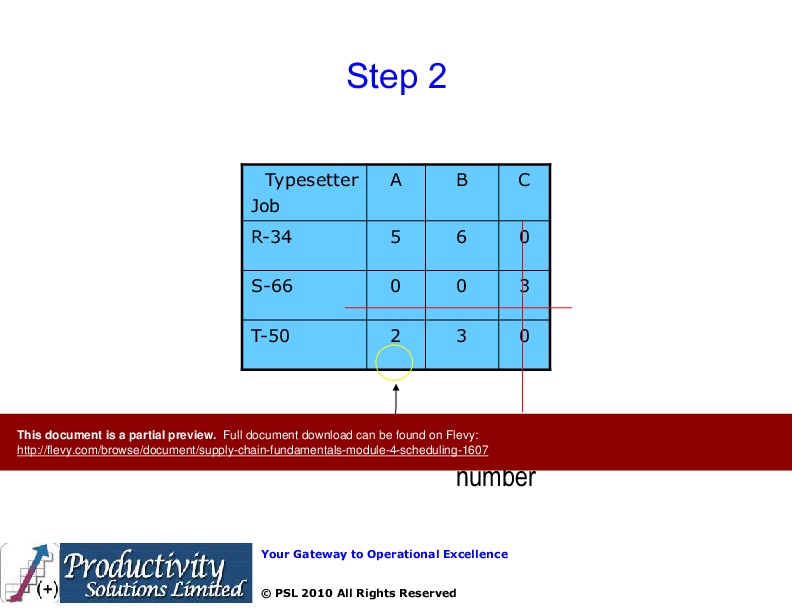
•  Step-by-step breakdown of the assignment method process
•  Comparative analysis of job sequencing rules and their effectiveness
•  Strategic implications of short-term scheduling on operational efficiency

Potential Workshop Agenda
Introduction to Scheduling Techniques (60 minutes)
•  Overview of scheduling implications and objectives
•  Discussion on forward and backward scheduling methods

Gantt Chart and Assignment Methods (90 minutes)
•  Hands-on session creating Gantt charts
•  Practical exercises on assignment methods and resource allocation

Job Sequencing and Prioritization (60 minutes)
•  Review of job sequencing rules
•  Group activity to apply sequencing criteria to case studies

Customization Guidance
•  Tailor Gantt chart templates to reflect specific project timelines and milestones
•  Adjust job sequencing criteria based on operational priorities and resource availability
•  Incorporate company-specific terminology in planning files and templates
•  Update capacity planning worksheets to align with current facility capabilities

Secondary Topics Covered
•  Capacity Planning strategies for optimizing facility size and equipment procurement
•  Aggregate Scheduling techniques for personnel needs and subcontracting
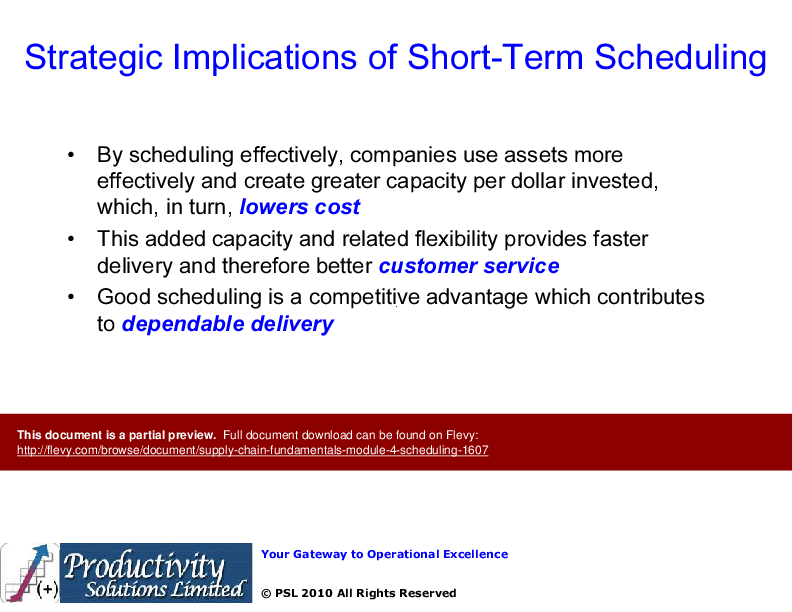
•  Short-term scheduling implications on customer service and operational costs
•  Qualitative and quantitative criteria for choosing scheduling methods

Topic FAQ

What are the main topics to cover in a scheduling training deck?

A scheduling training deck should cover scheduling implications, forward and backward scheduling, scheduling methods, types of planning files, loading jobs in work centres, Gantt charts, assignment methods, and sequencing. These correspond to the eight core sections found in many curricula, totaling 8 topics.

How do forward and backward scheduling differ and when is each used?

Forward scheduling begins as soon as requirements are known, offering flexibility, but potentially increasing work-in-progress (WIP). Backward scheduling starts from the due date and schedules tasks in reverse to meet deadlines; it is commonly used in manufacturing and service industries. Backward scheduling starts from the due date.

What scheduling metrics or rules should I consider for job sequencing?

Common sequencing rules include First Come, First Served (FCFS), Shortest Processing Time (SPT), Earliest Due Date (EDD), Critical Ratio (CR), and Longest Processing Time (LPT). Useful metrics to track include utilization, average completion time, and average job lateness, with utilization and average job lateness being key metrics.

How can Gantt charts help with resource allocation on the shop floor?

Gantt charts provide a visual timeline of jobs and resource assignments, making it easier to spot workload peaks, overlaps, and idle times across work centres. They support tracking progress against deadlines and reallocating tasks to reduce bottlenecks, typically using Gantt chart templates for visualization.

What should I look for when choosing a scheduling training deck or toolkit?

Look for explicit coverage of forward/backward scheduling, Gantt chart templates, planning file templates (item, routing, work centre), assignment method models, capacity planning worksheets, and customization guidance to match your operations. Flevy's Supply Chain Fundamentals Module 4 - Scheduling illustrates these elements and is delivered as a 43-slide deck.

How much time should I plan for a scheduling workshop to cover key topics?

A practical workshop agenda in the module suggests a 60-minute introduction on scheduling implications, a 90-minute hands-on session for Gantt charts and assignment methods, and a 60-minute job sequencing/prioritization session, totaling 210 minutes (3.5 hours).

I need to minimize WIP on my shop floor—what scheduling techniques should I consider?

To reduce WIP, consider tighter job sequencing rules, short-term scheduling frameworks, and reviewing forward versus backward scheduling trade-offs to limit overlapping work. Use sequencing criteria and prioritization exercises to reduce in-process inventory, applying rules such as Shortest Processing Time to lower WIP.

Can I adapt scheduling templates to my company’s terminology and capacity data?

Yes. Guidance in the material recommends tailoring Gantt chart templates, adjusting job sequencing criteria to operational priorities, incorporating company-specific terminology into planning files, and updating capacity planning worksheets using planning file templates like the Item Master File, Routing File, and Work Centre Master File.

Document FAQ
These are questions addressed within this presentation.

What is the difference between forward and backward scheduling?
Forward scheduling starts as soon as requirements are known, while backward scheduling begins with the due date and works in reverse order to meet deadlines.

How can Gantt charts improve scheduling efficiency?
Gantt charts provide a visual representation of job progress and resource allocation, helping teams manage workloads and deadlines effectively.

What are the key criteria for job sequencing?
Key criteria include First Come, First Served, Shortest Processing Time, and Earliest Due Date, each impacting efficiency and customer satisfaction differently.

How does effective scheduling impact customer service?
Effective scheduling optimizes resource utilization and reduces lead times, leading to faster delivery and improved customer satisfaction.

What types of planning files are essential for scheduling?
Essential planning files include the Item Master File, Routing File, and Work Centre Master File, which provide critical information for scheduling operations.

What is the role of assignment methods in scheduling?
Assignment methods help allocate jobs to resources efficiently, minimizing costs and maximizing the use of available capacity.

How can I minimize work-in-progress (WIP) inventory?
By implementing effective scheduling techniques and prioritizing job sequencing, organizations can reduce WIP and improve overall efficiency.

What are the strategic implications of short-term scheduling?
Effective short-term scheduling enhances asset utilization, reduces operational costs, and provides a competitive advantage through improved delivery times.

Glossary
•  Forward Scheduling - Scheduling that begins as soon as requirements are known.
•  Backward Scheduling - Scheduling that starts with the due date and works in reverse order.
•  Gantt Chart - A visual tool for tracking job progress and workload.
•  Job Sequencing - The order in which jobs are processed based on specific criteria.
•  Work Centre Master File - A file containing information about work center capacity and efficiency.
•  Assignment Method - A technique for allocating jobs to resources to minimize costs.
•  WIP (Work-in-Progress) - Inventory that is partially completed and not yet finished goods.
•  Capacity Planning - The process of determining facility size and equipment needs.
•  Aggregate Scheduling - Scheduling that considers overall facility utilization and personnel needs.
•  Short-Term Scheduling - Scheduling focused on immediate operational needs, typically hourly to weekly.
•  Critical Ratio (CR) - A scheduling rule based on the ratio of time remaining to work time remaining.
•  First Come, First Served (FCFS) - A job sequencing rule that processes jobs in the order they arrive.
•  Shortest Processing Time (SPT) - A job sequencing rule that prioritizes jobs with the shortest processing time.
•  Earliest Due Date (EDD) - A job sequencing rule that processes jobs with the earliest due dates first.
•  Longest Processing Time (LPT) - A job sequencing rule that processes jobs with the longest processing time first.
•  Utilization - The percentage of time a facility or resource is actively used.
•  Average Completion Time - The average time taken to complete jobs in the system.
•  Average Job Lateness - The average amount of time jobs are late beyond their due dates.
•  Appointment Systems - Scheduling systems used in service industries, such as healthcare and hospitality.
•  Reservation Systems - Scheduling systems used for managing bookings, such as in restaurants or rentals.

Source: Best Practices in Scheduling PowerPoint Slides: Supply Chain Fundamentals Module 4 - Scheduling PowerPoint (PPTX) Presentation Slide Deck, OpEx Academy NZ


$24.00
This presentation is developed by a pioneer in Lean and certified LSS Master Black Belt who has trained over 5,000+ students globally, from Directors, CEOs, GMs, to shop floor staff. He's endorsed by CMI Consortium, NZTE, HERA, NZPICS, CBAFF.
Add to Cart
  

ABOUT THE AUTHOR

Author image
Additional documents from author: 88

Vishnu Rayapeddi is an experienced management consultant and trainer specializing in implementing continuous process improvements. Vishnu is a pioneer in Lean Management which combines the power of Lean Thinking, TOC, Six Sigma, TQM, TWI, Balanced Scorecard, cGMP and other best-class methodologies such as, DMAIC, Value Stream Mapping, Root Cause Analysis, 5S, Quick Changeovers, Quality and ... [read more]

Ask the Author a Question

You must be logged in to contact the author.

Click here to log in Click here register

Did you know?
The average daily rate of a McKinsey consultant is $6,625 (not including expenses). The average price of a Flevy document is $65.

Bundle and save! You can save up to % with bundles!

View bundle(s)


Trusted by over 10,000+ Client Organizations
Since 2012, we have provided business templates to over 10,000 businesses and organizations of all sizes, from startups and small businesses to the Fortune 100, in over 130 countries.
AT&T GE Cisco Intel IBM Coke Dell Toyota HP Nike Samsung Microsoft Astrazeneca JP Morgan KPMG Walgreens Walmart 3M Kaiser Oracle SAP Google E&Y Volvo Bosch Merck Fedex Shell Amgen Eli Lilly Roche AIG Abbott Amazon PwC T-Mobile Broadcom Bayer Pearson Titleist ConEd Pfizer NTT Data Schwab


Read Customer Testimonials

 
"I like your product. I'm frequently designing PowerPoint presentations for my company and your product has given me so many great ideas on the use of charts, layouts, tools, and frameworks. I really think the templates are a valuable asset to the job."

– Roberto Fuentes Martinez, Senior Executive Director at Technology Transformation Advisory
 
"[Flevy] produces some great work that has been/continues to be of immense help not only to myself, but as I seek to provide professional services to my clients, it gives me a large "tool box" of resources that are critical to provide them with the quality of service and outcomes they are expecting."

– Royston Knowles, Executive with 50+ Years of Board Level Experience
 
"The wide selection of frameworks is very useful to me as an independent consultant. In fact, it rivals what I had at my disposal at Big 4 Consulting firms in terms of efficacy and organization."

– Julia T., Consulting Firm Owner (Former Manager at Deloitte and Capgemini)
 
"As a young consulting firm, requests for input from clients vary and it's sometimes impossible to provide expert solutions across a broad spectrum of requirements. That was before I discovered Flevy.com.

Through subscription to this invaluable site of a plethora of topics that are key and crucial to consulting, I "

– Nishi Singh, Strategist and MD at NSP Consultants
 
"As an Independent Management Consultant, I find Flevy to add great value as a source of best practices, templates and information on new trends. Flevy has matured and the quality and quantity of the library is excellent. Lastly the price charged is reasonable, creating a win-win value for "

– Jim Schoen, Principal at FRC Group
 
"One of the great discoveries that I have made for my business is the Flevy library of training materials.

As a Lean Transformation Expert, I am always making presentations to clients on a variety of topics: Training, Transformation, Total Productive Maintenance, Culture, Coaching, Tools, Leadership Behavior, etc. Flevy "

– Ed Kemmerling, Senior Lean Transformation Expert at PMG
 
"Flevy.com has proven to be an invaluable resource library to our Independent Management Consultancy, supporting and enabling us to better serve our enterprise clients.

The value derived from our [FlevyPro] subscription in terms of the business it has helped to gain far exceeds the investment made, making a subscription a no-brainer for any growing consultancy – or in-house strategy team."

– Dean Carlton, Chief Transformation Officer, Global Village Transformations Pty Ltd.
 
"I have used FlevyPro for several business applications. It is a great complement to working with expensive consultants. The quality and effectiveness of the tools are of the highest standards."

– Moritz Bernhoerster, Global Sourcing Director at Fortune 500


Save with Bundles

This document is available as part of the following discounted bundle(s):

Save %!
Supply Chain Fundamentals (5 Modules)

This bundle contains 5 total documents. See all the documents to the right.

$105.00


Add Bundle & Save


Customers Also Bought These Documents


Customers Also Like These Documents

Explore Related Management Topics


Your Recently Viewed Documents
Receive our FREE presentation on Operational Excellence

This 50-slide presentation provides a high-level introduction to the 4 Building Blocks of Operational Excellence. Achieving OpEx requires the implementation of a Business Execution System that integrates these 4 building blocks.